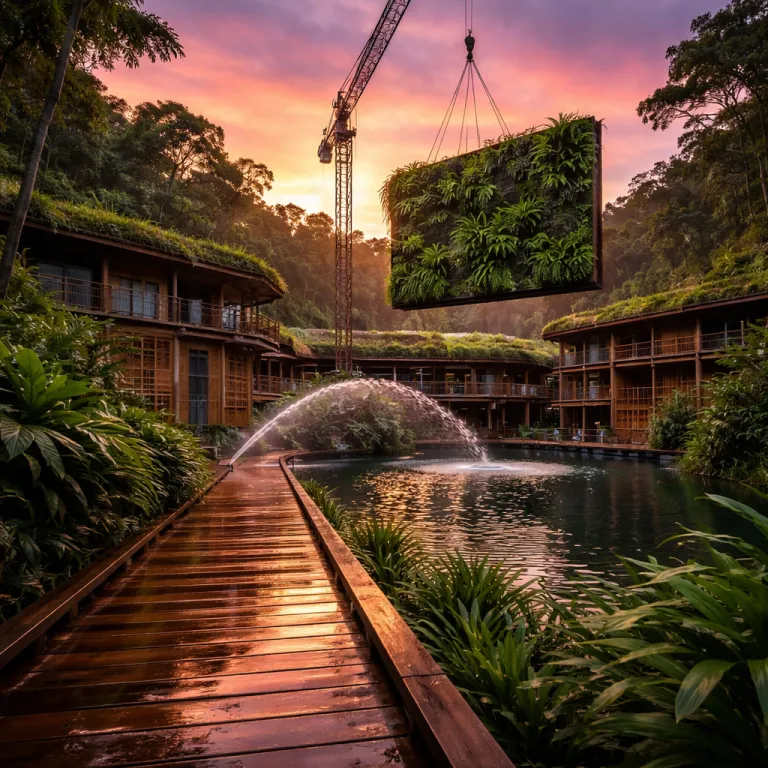
Mandai Rainforest Resort and the new language of biophilic luxury
Mandai Rainforest Resort by Banyan Tree does not behave like a typical hotel in Singapore. It treats biophilic design as the starting brief, not a decorative afterthought, and that single decision quietly rewrites what luxury can mean for a local guest who usually checks into a hotel downtown for a quick staycation. Here, the hospitality industry is testing how far a property can go when direct nature, wildlife soundscapes and natural ventilation are treated as core infrastructure rather than soft furnishings.
The resort sits inside Mandai Wildlife Reserve on a 4.6 hectare site, with 338 guest rooms and 24 elevated treehouse style units threaded between mature trees instead of replacing them. According to Mandai Wildlife Group and Banyan Tree project information, this low density layout is intentional, preserving existing canopy and sightlines across the reserve. That siting choice matters for any Singapore based traveler who has grown up with the "garden city" slogan but rarely sleeps this close to actual rainforest, because it turns the house like comfort of a hotel room into a place where you feel the forest pressing gently against the glass. This is biophilic hotel design in Singapore in its purest form, where architecture, landscape and operations are calibrated to reduce stress, improve air quality and create a guest experience that feels more like a slow walk through a shaded park than a sprint through a mall.
Mandai’s design team, led by Banyan Tree with WOW Architects, leans hard into biophilia as a measurable strategy rather than a mood board. They use natural materials such as sustainably sourced timber, stone and lime based finishes to keep embodied carbon low while giving guests tactile proof that this is not another anonymous stack of design hotels with shiny veneers, and the result is a hospitality product that feels grounded in place instead of floating above it. The resort’s methods include biophilic planning, sustainable materials and energy efficient systems, and its tools include natural ventilation, rainwater harvesting and solar panels; together these choices show how the benefits of nature led thinking can move from spa brochure copy into the operational core of a serious property. Public project information from Mandai Wildlife Group and Banyan Tree also highlights targets for reduced energy consumption, on site water reuse and green building certification, signalling that the resort’s rainforest narrative is backed by measurable performance rather than marketing alone.
From Mandai to Orchard Road: how nature is reshaping urban hotels
If Mandai Rainforest Resort is the rainforest laboratory, Pan Pacific Orchard is the urban prototype that brings biophilic hotel design in Singapore into the thick of Orchard Road. The tower’s stacked terraces, sky gardens and water features prove that even in the most commercial stretch of the city, hotels can carve out layered green spaces that feel almost like elevated parks, and this is where the hospitality industry starts to show how direct nature and indirect nature can be balanced in a dense grid. For a Singapore resident used to air conditioned malls, the experience of walking from the MRT into a lobby where plants, natural light and cross ventilation are doing as much work as the mechanical systems is quietly radical.
Pan Pacific Orchard’s architecture uses vertical greenery, rainwater harvesting and shaded communal areas to create a sequence of spaces where guests can sit, linger and feel a real connection to nature without leaving the city. These are not token planters; they are structural gardens that cool the building envelope, filter air and shape the guest rooms above, and they demonstrate how biophilic strategies can be scaled up for large hotels rather than reserved for a single spa deck. One recent guest described the transition from Orchard Road traffic to the sky garden lobby as "like stepping into a cooler, softer version of the city", and when you compare this to a conventional hotel downtown, where the only greenery might be a potted palm by the lift, the benefits nature focused thinking delivers in terms of thermal comfort, acoustic softness and perceived privacy become obvious within minutes.
Nearby, the upcoming NoMad Singapore signals the next wave, with its planned 15 storey cascading waterfall on Orchard Road turning water into both spectacle and climate device. This is where biophilic design risks tipping into theatricality, yet it also shows how the industry is starting to compete on nature centric amenities rather than just thread count, and that competition can be healthy if it pushes more properties to integrate natural materials, serious planting and thoughtful communal areas into their core layouts. For travelers browsing a luxury and premium booking website, this shift means the filter is no longer just "pool" or "late checkout" but whether the hotel’s spaces genuinely work with Singapore’s climate and ecology, from shaded outdoor terraces to energy efficient façades that reduce cooling loads.
Mandai as blueprint: beyond green walls to true ecosystem hospitality
The most important lesson Mandai Rainforest Resort offers the wider hospitality industry is that biophilic hotel design in Singapore must move beyond lobby plants and Instagram friendly green walls. At Mandai, the entire masterplan is oriented around existing trees, wildlife corridors and water flows, which means the resort behaves like a guest in the forest rather than a house that has claimed the land, and that reversal of hierarchy is what gives the guest experience its quiet power. When a property is designed so that guests wake to bird calls, filtered light and cooler air from surrounding canopy, the connection to nature becomes visceral rather than conceptual.
Mandai’s 24 treehouse accommodations are the clearest example of this ecosystem first thinking in action. Elevated above the forest floor, they minimise ground disturbance while giving guests a rare vantage point over the canopy, and the architecture uses natural ventilation, shading and indirect nature cues such as textured timber, earthy palettes and curated soundscapes to reduce reliance on mechanical cooling. For a Singapore based traveler used to sealed hotel rooms, the ability to sit on a balcony and feel moving air, hear water in the distance and see plants at eye level is a reminder that luxury can be measured in sensory richness rather than square metres alone.
Crucially, Mandai integrates its operations with the surrounding Mandai Wildlife Reserve through partnerships with Mandai Wildlife Group and the Singapore Tourism Board, aligning hospitality with conservation and eco tourism goals. Public project briefings from these partners emphasise habitat protection, energy efficiency and low impact mobility as core performance indicators rather than optional extras. This is where the benefits of biophilic strategies intersect with policy and long term stewardship, setting a benchmark that other hotels in the garden city will be judged against as new projects come online. When you next scroll through design hotels on a booking platform, the question to ask is simple yet unforgiving: does this property treat biophilia as a marketing adjective, or does its layout, materials and guest journey show that nature has been given equal billing with revenue per available room.
How to book smarter: reading biophilic design like a local insider
For a Singapore based solo explorer planning a staycation or a quiet work retreat, the rise of biophilic hotel design in Singapore changes how you should read hotel listings. Instead of stopping at photos of a rooftop pool, look for evidence of direct nature such as real gardens, water bodies and views of trees, and then cross check for indirect nature elements like natural materials, organic forms and daylight in guest rooms and communal areas. The properties that take this seriously, from Mandai Rainforest Resort to Pan Pacific Orchard and Oasia Hotel Downtown, tend to deliver a calmer, more grounded guest experience that lingers long after checkout.
Oasia Hotel Downtown remains a useful benchmark for urban biophilic hospitality because its red metal mesh and climbing plants turn the tower into a vertical garden that actively cools the façade. Inside, the guest rooms and shared spaces use timber, stone and generous openings to improve air quality and reduce stress, proving that even in the CBD a hotel can feel like a breathable place rather than a sealed glass box. One frequent business traveler summed it up after a weekend stay: "I left feeling rested instead of drained, which almost never happens after two nights in the city." When you compare this to older hotels where the only nod to nature is a framed print in the hotel room, the difference in how your body feels after a weekend stay is not subtle.
As you browse options on my-singapore-stay.com, pay attention to how each property talks about its relationship with nature and the city. Our guide to elegant hotels near Orchard Road already highlights which addresses are quietly pushing the envelope on greenery, water sensitive design and low impact architecture, and Mandai now extends that conversation into the rainforest edge. The hospitality industry is clear on one thing; "What is biophilic design?" and "What makes the resort sustainable?" are no longer niche questions for eco tourists but mainstream criteria for anyone in Singapore who wants their next hotel stay to feel aligned with the garden city they call home.
Key figures shaping biophilic hotel design in Singapore
- Mandai Rainforest Resort offers 338 rooms and 24 treehouse style units across 4.6 hectares in Mandai Wildlife Reserve, giving it one of the lowest room to land ratios among new luxury hotels in Singapore according to Mandai Wildlife Group and Banyan Tree project data.
- The resort’s location at approximately 1.4043° N and 103.7905° E places it within a short radius of multiple wildlife parks, making it the first major luxury property in Singapore to integrate overnight stays directly with a cluster of conservation attractions, based on Mandai Wildlife Group public information.
- Mandai Rainforest Resort was developed and is operated by Banyan Tree in partnership with Mandai Wildlife Group and the Singapore Tourism Board, signalling that biophilic design and eco tourism are now strategic priorities rather than side projects for the national hospitality industry, as outlined in their joint announcements and sustainability briefings.
Sources
- Leading Hoteliers – analysis of Singapore’s luxury hotel pipeline and investment trends.
- Hotel Designs – reporting on global spa and biophilic design trends in hospitality.
- Mandai Wildlife Group and Banyan Tree public project information on Mandai Rainforest Resort, including room counts, site area, sustainability targets and partnership details.