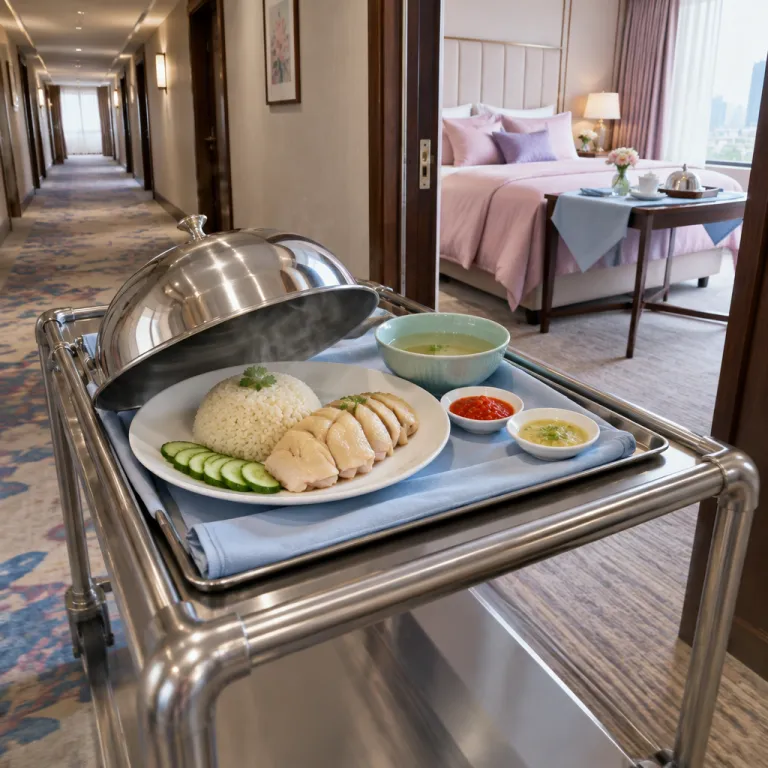
The Hainanese hotel kitchen roots of a national rice dish
Hainanese chicken rice did not start at a hawker stall in a noisy market. It grew out of quiet hotel kitchens in Singapore, where Hainanese cooks adapted a simple rice dish from Hainan into something brighter, softer and deeply chicken-forward. In the early 20th century, many Hainanese chefs worked in landmark properties such as Raffles Hotel and The Fullerton Building (then the General Post Office with staff canteens), refining poached chicken and rice for colonial clubs and private dining rooms. Today, when you book a luxury stay, you are also booking into that long story of hotel food shaping what we now call classic Singapore food.
Early Hainanese migrants often found work in colonial clubs, bungalows and grand hotel properties across the city. They cooked staff meals built around rice, poached chicken and a light sauce, then refined the dish for guests who wanted something comforting yet elegant to eat. That evolution from staff canteen to silver service explains why Hainanese hotel cuisine in Singapore still feels both humble and polished, especially when a restaurant treats every grain of rice with the same care as a glass of wine. As food historian accounts of Hainanese cooks in Singapore note, the move from back-of-house meals to dining-room signatures was gradual but decisive.
For a traveler based in Singapore planning a short trip or a longer staycation, understanding this history changes how you choose a hotel. You are not just picking a room near the airport or a rooftop pool with a good view of the city skyline. You are choosing whether your next plate of Hainanese chicken or kaya toast comes from a kitchen that remembers its own role in creating authentic Singaporean comfort food, or from a generic all-day dining buffet line that treats local dishes as decoration rather than heritage.
From staff breakfast to lobby café icon: kaya toast and hotel mornings
Kaya toast, soft eggs and coffee now feel like the most Singaporean breakfast set imaginable. Yet this ritual has roots in hotel service quarters, where Hainanese cooks experimented with coconut jam and bread between shifts of preparing Western-style food for guests. In oral histories collected by the National Archives, former hotel staff describe toasting leftover bread over charcoal, spreading on thick pandan-scented kaya and serving it with strong kopi to colleagues before dawn. When you sit in a polished lobby café today, that simple dish still carries the story of workers who turned leftover bread and eggs into something quietly luxurious to eat.
Look at how some city hotels now frame their breakfast menus around Singaporean Hainanese heritage. A well-curated buffet might place kaya toast beside chicken rice porridge and other Singapore food icons, treating them as equal to imported pastries or continental sets. At properties such as Goodwood Park Hotel or Carlton Hotel Singapore, you may find kaya toast grilled to order, served with gently quivering soft-boiled eggs and a drizzle of dark soy sauce. For a solo explorer, this is where Hainanese hotel cuisine in Singapore feels most alive, because you can taste how a staff meal became a national habit without leaving the property before your first coffee of the day.
When you compare options on a premium booking site, read the breakfast section as closely as the room descriptions. A hotel that offers a made-to-order Hainan-inspired rice dish or a properly soft-boiled egg with dark sauce is signalling that it respects local food culture. If you care about heritage as much as late checkout, this matters more than whether the restaurant has a view of Jewel Changi or a generic mural of the airport skyline, because breakfast is often the most honest expression of a property’s relationship with its city.
Where to stay for serious Hainanese chicken rice on property
Some luxury hotels in Singapore still treat Hainanese chicken rice as a signature rather than a token local dish. At these properties, the rice is fragrant with stock and ginger, the chicken tender without being mushy, and the trio of chilli, dark soy sauce and ginger paste is balanced enough to eat by the spoonful. Long-running favourites such as Chatterbox at Hilton Singapore Orchard, or the Hainanese chicken rice served at Mandarin Oriental, Singapore, show how a hotel kitchen can give a humble rice plate the same attention as a multi-course tasting menu.
When you browse a booking platform, look for restaurants that highlight Singaporean Hainanese classics in both singular and set menu formats. A good hotel will offer chicken rice in the lobby restaurant, on room service and sometimes as part of a late-night supper set for guests returning from a trip to a hawker centre. That flexibility respects how locals actually travel and eat, moving between hawker stalls and hotel dining rooms in the same evening, and it mirrors how many Singaporeans mix neighbourhood favourites with special-occasion hotel meals.
For many Singaporeans, the benchmark is whether the on-site restaurant can stand up to a favourite hawker stall in the city. It will rarely beat the best hawker chicken rice, but it should feel like an authentic Singaporean interpretation rather than a watered-down tourist plate. When a property gets this right, you can land at Changi Airport, check in, and have a plate of Hainanese chicken within an hour that tastes like home rather than like generic airport food, complete with warm broth and rice that still glistens with chicken fat.
Room service, late arrivals and the airport to hotel chicken rice run
If you are landing late at Changi Airport after regional travel, the first question is often simple. Can the hotel still send up a proper plate of chicken rice when you reach your room, or will you be stuck with a tired club sandwich? This is where the quiet power of Hainanese hotel cuisine in Singapore shows itself, because a well-run kitchen understands that a warm rice dish can reset your whole trip and ground you in the city the moment you arrive.
Many premium properties now design their overnight room service menus around Singapore food that travels well on a trolley. Hainanese chicken, congee and other rice-based comfort dishes hold heat better than fries, and they taste even better with the lights low and the city outside your window. When the chicken is still tender, the rice still glossy and the sauce still bright at midnight, you know the restaurant team respects both the dish and the traveler. Guest reviews that mention “surprisingly good midnight chicken rice” or “room service that tasted like a neighbourhood stall” are often more revealing than any marketing copy.
For those who treat Jewel Changi as part of the journey rather than just an airport mall, the comparison becomes sharper. You might eat a quick plate of chicken rice near the waterfall, then order another version from your hotel later that night. That side-by-side experience tells you whether the property is serious about Singaporean Hainanese heritage or simply ticking a box on the menu for marketing purposes, and it can turn a routine arrival into an informal tasting of how different kitchens interpret the same classic.
Heritage on the plate versus design in the lobby
Singapore is full of hotels that photograph beautifully but serve forgettable food. For a traveler who cares about Hainanese hotel cuisine in Singapore, the more interesting properties are often the ones where the culinary history is richer than the renovation budget. These are the places where the story of the kitchen, the staff meals and the evolving chicken rice recipe matters as much as the thread count, and where long-serving cooks quietly shape the menu more than branding consultants do.
When you read property descriptions, pay attention to how they talk about their restaurants, not just their rooms. A hotel that explains its connection to Hainanese cooks, to early Singaporean Hainanese communities or to long-running staff canteens is usually more serious about its rice and sauce than one that only lists international buffets. This is the same instinct that draws some travelers to hotels that collect art like galleries, where the walls speak louder than the lobby music, and you can explore that approach in more depth at this guide to art focused hotels in Singapore.
Heritage food in hotel restaurants also sits alongside other traditions, from Peranakan stews to Cantonese roasts and contemporary fusion menus. When a property can serve a serious Hainan-inspired rice dish next to a refined Peranakan curry and a modern small plate from a visiting chef, it shows confidence rather than confusion. For the solo explorer, that mix turns a simple city stay into a layered food trip without ever leaving the building, and it reflects how Singaporeans themselves move easily between coffee shops, hotel lounges and fine-dining rooms.
How Hainanese hotel cuisine sits beside Peranakan and Cantonese traditions
Walk through the dining options in any major city hotel and you will see a familiar pattern. One restaurant leans Cantonese, another nods to Peranakan flavours, and somewhere on the menu sits Hainanese chicken rice as the quiet constant. Understanding how Hainanese hotel cuisine in Singapore fits into this trio helps you choose where to book when your trip is built around food and you want to taste the city’s main culinary strands in one place.
Cantonese restaurants in hotels often focus on roast meats, double-boiled soups and delicate seafood, while Peranakan outlets lean into spice pastes and slow-cooked stews. Hainanese dishes, by contrast, are defined by clarity and restraint, with rice and chicken taking centre stage and sauce used to frame rather than drown the flavours. When a hotel respects all three traditions, you can move from a Peranakan lunch to a Cantonese dinner and end the night with a simple rice dish that tastes like the city distilled, clean yet deeply savoury.
Some of the most interesting new openings in Singapore now play with these boundaries. You can see how chefs reinterpret heritage at places highlighted in this overview of new accents in Singapore dining, where local ideas meet international techniques. When you choose a hotel, look for restaurants that talk about Singaporean Hainanese roots with the same seriousness they give to imported cuisines, because that balance usually leads to the best overall restaurant experience on site and a more nuanced understanding of how the city eats today.
Using a hotel booking site to filter for real Hainanese heritage
A good luxury booking platform can help you separate marketing from meaning. Start by filtering for properties that highlight Singapore food in their descriptions, then read deeper to see whether Hainanese chicken rice or other rice dish staples are treated as signatures. If the restaurant section talks about chicken rice with the same care it gives to steak or pasta, you are likely looking at a hotel that understands its own role in the story and sees local cuisine as a strength rather than an obligation.
Next, scan the room service menu and breakfast offerings, which many booking sites now link directly. You want to see options for a full Hainan style set, with rice, chicken, soup and sauce, available beyond narrow lunch hours. That flexibility matters if your flight into Changi Airport is delayed or your day trip runs long, because real-life travel rarely fits into neat restaurant time slots, and late-night cravings for something familiar are part of the modern Singapore experience.
Finally, read guest reviews with a hawker-savvy eye. When multiple Singaporean guests praise the chicken’s tender texture, the fragrance of the rice and the balance of the chilli sauce, you can trust that the kitchen is doing more than a token effort. For a traveler based in Singapore, that is the difference between a hotel that simply houses you and one that quietly reminds you why this city fell in love with a humble plate of chicken rice in the first place, echoing the way local media polls consistently rank the dish among the nation’s most beloved meals.
Key figures on Hainanese chicken rice and hotel dining in Singapore
- Singapore Tourism Board data shows that food-related activities feature in over 70 percent of visitor itineraries, underscoring how central dishes like Hainanese chicken rice are to the city’s appeal.
- In surveys of local diners by various media outlets, chicken rice consistently ranks among the top three favourite Singapore food choices, often competing with laksa and chilli crab for the top spot.
- Changi Airport handled over 30 million passenger movements in a recent year, and its dining mix includes multiple outlets serving chicken rice, reflecting demand for familiar rice dishes immediately on arrival.
- Hotel industry reports indicate that properties with strong local restaurant concepts can see higher average food and beverage revenue per occupied room compared with hotels relying mainly on international buffets.
- Consumer research in Singapore has found that a significant share of residents choose staycation hotels based partly on breakfast quality, with local dishes such as kaya toast and chicken rice cited as key decision factors.
FAQ about Hainanese hotel cuisine in Singapore
Which Singapore hotels are best known for serving good Hainanese chicken rice?
Several established city hotels are recognised for taking Hainanese chicken rice seriously, often featuring it as a signature in their main restaurant and on room service. Longstanding examples frequently mentioned by local diners include Chatterbox at Hilton Singapore Orchard and the chicken rice at Mandarin Oriental, Singapore. Look for properties that highlight the dish in their marketing materials and that receive consistent praise from local guests in reviews, emphasising fragrant rice, properly poached chicken and well-balanced sauces rather than treating the dish as a token local option.
Is hotel Hainanese chicken rice very different from hawker versions in Singapore?
Hotel versions of Hainanese chicken rice tend to be slightly more refined in presentation, with cleaner plating and sometimes lighter seasoning. Hawker versions often have bolder flavours and a more intense chicken aroma, shaped by high-volume cooking and long-simmered stock. Many travelers enjoy trying both, using hotel restaurants for comfort and convenience while seeking out hawker stalls for a more rustic expression of the same dish, then comparing how each kitchen handles the rice, broth and condiments.
Can I get Hainanese chicken rice through room service late at night?
In many premium Singapore hotels, Hainanese chicken rice appears on the overnight room service menu because it travels well and suits late arrivals. Availability still varies, so it is worth checking the menu details on your booking site or the hotel’s own information before confirming a stay. If the dish is offered around the clock, that usually signals a strong commitment to local comfort food and a recognition that guests often crave something familiar after a long-haul flight.
How can I tell if a hotel respects Singaporean Hainanese food traditions?
Signs of respect include clear references to Hainanese heritage in menu descriptions, careful attention to rice quality and sauces, and staff who can explain the background of the dishes. Hotels that offer both individual plates and set menus built around classic rice dishes are often more serious about the cuisine. Consistent positive feedback from Singaporean guests about authenticity is another strong indicator, especially when reviewers mention details such as the warmth of the soup or the sharpness of the chilli.
Is it worth choosing a hotel mainly for its heritage food rather than its facilities?
For travelers who value culture and cuisine, choosing a hotel for its heritage food can be as rewarding as choosing one for a pool or spa. A property with strong Hainanese and other local offerings turns each meal into part of your exploration of the city. If you already live in Singapore and use hotels for staycations, this focus can make a familiar city feel new again through what arrives on your plate, from the first kaya toast at breakfast to the last late-night chicken rice sent up on a tray.