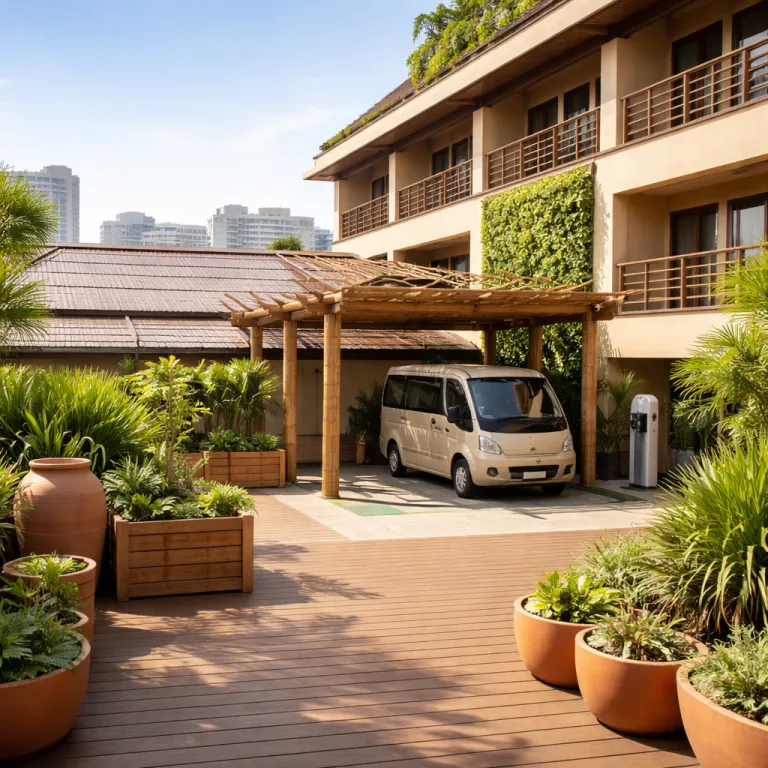
From Orchard boardrooms to green roofs: how sustainable hotels in Singapore are rewriting luxury
Step out of a Singapore meeting room at 17:00 and your next decision is no longer just which hotel has the best pool. It is which Singapore hotel can prove that its energy, water and food systems are as meticulously managed as your quarterly KPIs, because sustainable hotels in Singapore are now competing on hard numbers rather than soft marketing. For a business leisure traveler, that shift turns a routine hotel Singapore stay into a live case study in urban sustainability.
The city’s hospitality sector has moved beyond token green cards on the bedside table. Grand Hyatt Singapore, for example, has benchmarked sustainability across operations for decades, using energy-efficient systems, aggressive food waste reduction and smart water management to reduce energy consumption by close to a third compared with conventional hotels. According to Hyatt’s publicly shared sustainability case studies, the property has invested in measures such as a trigeneration plant and on-site food waste processing to achieve these gains. That kind of hotel sustainability performance is not abstract; it translates into quieter rooms thanks to better insulation, more stable temperatures from smart energy controls and fresher food because the kitchen is no longer overproducing for bloated buffets.
Across Singapore, about a quarter of hotels now carry some form of sustainability certification, according to the Singapore Tourism Board’s 2023 Tourism Sustainability Programme updates. That 25% is not yet a majority, but it is enough to let you choose between hotels based on measurable energy efficiency, renewable energy adoption and waste systems rather than vague green promises. For an executive extending a stay into the weekend, eco-conscious accommodation in Singapore now spans a spectrum from discreetly green heritage properties to full-scale urban resorts that wear their sustainability on the façade.
The honest question is whether these efforts meaningfully reduce energy and water use at city scale or simply shift the optics. Certifications such as those aligned with the Global Sustainable Tourism Council focus on systems and audits, while guests tend to notice the absence of single-use plastic amenities, the presence of filtered tap water and whether the air conditioning actually responds to occupancy sensors. The gap between what awards measure and what you feel in the room is where Singapore’s most ambitious hotels are now competing, and where sustainable tourism either becomes real or remains a line in a press release.
For travelers based in Singapore, this is not an abstract sustainability debate happening in some distant resort. It is the choice between a Pan Pacific–style high-rise at Marina Bay with visible vertical greenery and a more conventional property that still treats energy as an unlimited resource. When you book greener hotels in Singapore, you are effectively voting for smart energy systems, better food waste management and a city that takes its “City in Nature” positioning seriously.
Where the numbers meet the skyline: parkroyal collection, pan pacific and the new green arms race
On the Orchard and Marina Bay axis, sustainable hotels in Singapore have turned sustainability into a design language you can read from the taxi window. PARKROYAL COLLECTION Pickering, often shortened to COLLECTION Pickering, is the clearest example; its “hotel in a garden” profile is really a stack of urban terraces, sky gardens and cascading planters that double as insulation to reduce energy demand. Those lush layers are not just Instagram fodder, they are part of a deliberate strategy to improve energy efficiency and water retention while softening the hard edges of the Central Business District.
Inside, the PARKROYAL COLLECTION approach is quietly rigorous. Smart energy systems dim corridor lighting when no one is around, rainwater is harvested to irrigate the greenery and the hotel’s operations team tracks energy, water and waste data with the same discipline a finance department tracks cash flow. For a guest, that translates into cooler public spaces without overreliance on air conditioning, filtered drinking water on tap that cuts single-use plastic bottles and a breakfast spread that leans into local food sourcing to reduce transport emissions.
Down at Marina Bay, PARKROYAL COLLECTION Marina Bay, often referred to as COLLECTION Marina, pushes the concept further with a vast indoor garden under a glass atrium. Here, sustainable hotels in Singapore become almost theatrical; the lobby feels like a climate-controlled park, yet behind the scenes the hotel is working to reduce energy use through LED lighting, motion sensors and an energy-efficient chiller plant. The property’s focus on hotel sustainability extends to meetings and events, where planners can request carbon footprint estimates for conferences and choose menus designed to minimise food waste.
Pan Pacific and the broader Pan Pacific Hotels Group have taken a slightly different tack, emphasising biophilic design and operational discipline over spectacle. Pan Pacific Orchard, for instance, uses stacked “forest” terraces and open-air spaces to reduce reliance on mechanical cooling, while integrating water features that support evaporative cooling and reduce the need for energy-intensive systems. For a regional executive shuttling between Singapore and Kuala Lumpur, the consistency of Pan Pacific sustainability standards across properties makes it easier to align corporate travel policies with real-world hotel choices.
For readers who want a deeper dive into how Orchard Road properties are handling this shift, our guide to refined eco-conscious stays along Orchard Road breaks down which hotels are walking the talk. The pattern is clear; the most credible sustainable hotels in Singapore are those where energy, water and waste systems are visible in both design and daily operations, not just in awards submissions. When you choose a Singapore hotel in this corridor, you are choosing between different philosophies of sustainable tourism, from garden atriums to quietly efficient towers.
What guests actually feel: from farm table breakfasts to single plastic bans
For all the talk of certifications and renewable energy, most guests judge sustainable hotels in Singapore by what they can see, touch and taste. You notice whether the bathroom amenities are refillable instead of single-use minis, whether the in-room water comes from a filtration system rather than imported bottles and whether the breakfast buffet has a farm table section featuring local produce. These are the details that turn abstract hotel sustainability into something that feels grounded in Singapore’s food culture and urban fabric.
Properties like Pan Pacific Orchard and PARKROYAL COLLECTION Marina Bay have leaned into the farm-to-table narrative, sometimes literally with small urban farm plots or partnerships that bring local greens and herbs into the kitchen. When you sit down to breakfast and see labels indicating Singapore-grown vegetables or regionally sourced seafood, you are seeing the front end of a supply chain designed to reduce food miles, cut food waste and support more sustainable tourism. The same logic applies to meetings and events menus, where chefs now design courses to be flexible, seasonal and portioned to reduce leftovers without leaving delegates hungry.
Bathroom shelves are another quiet battleground. Many eco-friendly hotels in Singapore now offer large-format, refillable amenities, often paired with in-room filtration taps that make it easy to avoid single-use bottles entirely. This is where an environmental stance intersects with real convenience; you can refill your own bottle before heading to a client meeting, confident that the water quality meets Singapore’s high standards, while the hotel reduces waste and the energy needed to transport bottled water.
Some properties go further by integrating renewable energy sources into their operations, whether through solar panels on rooftops or purchasing green electricity from the grid. Guests may not see the photovoltaic arrays, but they feel the impact in the form of stable room temperatures, quieter air conditioning and the knowledge that part of their stay is powered by clean energy. When sustainable hotels in Singapore communicate these efforts clearly, without jargon, they build trust and make it easier for business travelers to justify choosing a slightly higher rate in exchange for better energy efficiency and lower emissions.
If you care about the finer points of amenities, our feature on eco-conscious toiletries in central Singapore hotels unpacks which properties are leading on this front. The pattern is consistent; the most convincing Singapore hotel experiences are those where sustainability shows up in the shower, at the farm table breakfast and in the way staff talk about food waste and water use, not just in a framed certificate near the lift lobby.
Beyond greenwashing at altitude: how to book smarter in a city chasing net zero
Singapore’s tourism authorities have been explicit about their ambitions, positioning the city as a “City in Nature” and backing that up with the Tourism Sustainability Programme that helps hotels transition to lower-impact operations. That support ranges from advisory services on smart energy systems to co-funding for energy-efficient retrofits, water-saving fixtures and waste management technology. For a frequent traveler, this means the baseline for sustainable hotels in Singapore is rising, but the spread between leaders and laggards is still wide enough to matter.
When you book, start by looking for recognised certifications such as those from the Global Sustainable Tourism Council or Green Globe, which underpin the efforts at properties like Four Seasons Hotel Singapore, Pullman Singapore Orchard and The Fullerton Hotels and Resorts. These labels indicate that hotel sustainability practices around energy, water, waste and community engagement have been independently audited, not just self-reported for marketing awards. At the same time, remember that the basic definition of sustainable hotels—properties that implement practices to reduce environmental impact—is only the baseline, not the finish line for a city aiming at net zero.
Next, interrogate the details that matter to your own footprint. Does the Singapore hotel publish data on how much it has managed to reduce energy consumption or water use over time, ideally in the range of the roughly 30% reductions reported by leading green hotel case studies in industry associations and corporate sustainability reports? Does it have clear policies on food waste, including donation or composting, and does it avoid single-use plastic in both rooms and meetings and events spaces? The more specific the answers, the more likely you are dealing with a property where sustainable tourism is embedded in operations rather than confined to a CSR slide.
For executives who split time between Singapore and regional hubs like Kuala Lumpur, aligning corporate travel policies with these realities is the next frontier. Chains such as Pan Pacific and PARKROYAL COLLECTION make it easier by applying similar energy efficiency, water conservation and waste reduction standards across their hotels, allowing procurement teams to negotiate rates that reflect both service levels and sustainability performance. If you are mixing a Marina Bay board meeting with a Sentosa weekend, you can now choose sustainable hotels in Singapore that treat the island’s beaches, urban parks and bayfront skyline as assets to be protected, not just backdrops for marketing.
Finally, remember that sustainability does not always correlate with price. Some value-focused properties, such as those featured in our review of value-focused city stays in Singapore, are beginning to integrate eco-friendly practices like smart energy controls and reduced linen changes without chasing high-profile awards. As a traveler based in Singapore, your booking choices send a clear signal; reward the hotels that treat energy, water, food and waste as strategic resources, and the market will follow faster than any conference keynote.
Key figures shaping sustainable hotels in Singapore
To understand how these ideas translate into measurable outcomes, it helps to look at concrete performance data from a leading property and how that scales to the wider city. Individual hotel gains in energy efficiency and water conservation may seem modest in isolation, but aggregated across hundreds of properties they form a critical part of Singapore’s broader net-zero pathway by cutting operational emissions from the accommodation sector.
| Hotel (illustrative case) | Energy use reduction* | Water savings* | Waste diverted from landfill* |
|---|---|---|---|
| Grand Hyatt Singapore | ≈30% lower electricity consumption per room night vs. a conventional baseline | ≈10–15% reduction in potable water use through low-flow fixtures and reuse systems | Up to 50% of food waste diverted via on-site processing and partnerships |
*Figures are indicative, compiled from Grand Hyatt Singapore sustainability case studies, Hyatt corporate responsibility reports and industry summaries rather than a single audited source.
- About 25% of hotels in Singapore currently hold some form of sustainability certification, according to the Singapore Tourism Board’s 2023 Tourism Sustainability Programme updates, giving travelers a meaningful but still limited pool of audited sustainable hotels in Singapore to choose from.
- Leading sustainable hotels in Singapore have achieved around a 30% reduction in energy consumption compared with conventional properties, based on aggregated case studies referenced by organisations such as the Green Hotel Association and corporate ESG disclosures, illustrating how energy efficiency and smart energy systems can materially reduce operating emissions.
- Guest satisfaction scores in eco-friendly hotels are reported to be approximately 10–15% higher than in comparable non-certified hotels in several Hospitality Net and academic hospitality research summaries, suggesting that visible efforts to reduce energy, water use and waste are now a competitive advantage rather than a compromise.